




From Our Community to Capitol Hill
 When most people think about the role of a general manager at an electric cooperative, they probably picture the day-to-day work of keeping the lights on. That is certainly an important part of the job. At our cooperative, we think every day about reliability, service, safety and doing our work in a way that respects the people and communities we serve. But the job also reaches beyond our local offices and service territory.
One of my responsibilities is to represent our members wherever decisions are being made that could affect your electric service, your monthly bill or the future of rural Missouri. Sometimes that means meeting with state leaders in Jefferson City. Other times, it means carrying your voice to Washington, D.C.
At the end of April, Kendall Davis, president of our board of directors, and I traveled to Washington, D.C., where more than 1,500 electric cooperative leaders from across the country gathered for the annual legislative conference hosted by the National Rural Electric Cooperative Association (NRECA). Missouri was well represented, with a delegation of about 60 cooperative directors, CEOs and leaders meeting with our congressional offices and policy leaders.
These trips are not about politics. They are about people.
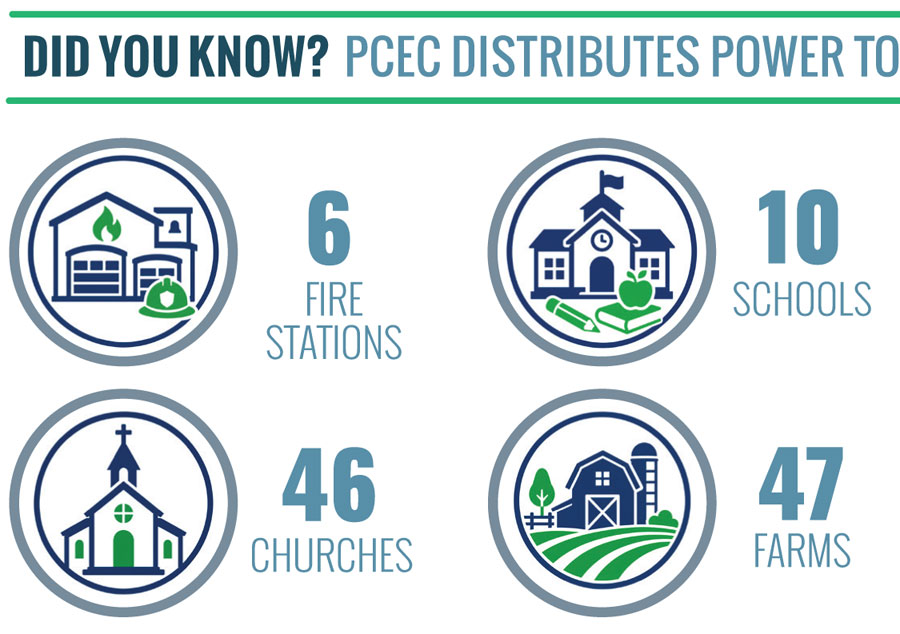
They are about the families who expect dependable electricity when they wake up in the morning, when they come home from work or when a storm rolls through. They are about small businesses, farms, schools, churches and community buildings that depend on affordable and reliable power every day. They are about making sure rural communities are not overlooked when laws and regulations are written.
Electric cooperatives were created because rural people needed someone to stand up for them. That is still true today.
While in Washington, we talked with congressional staff and policy leaders about practical, common-sense solutions that matter to rural electric cooperative members.
One of the biggest topics was affordable financing for electric systems. Our cooperative, like others across the country, must continue investing in poles, wires, substations, equipment and technology. As infrastructure ages and demand grows, those investments are necessary. Affordable federal loan programs help cooperatives make needed improvements without putting unnecessary pressure on electric rates.
We also discussed the importance of reliable, low-cost hydropower. Hydropower has long been a dependable resource for many electric cooperatives, including PCEC. In 2025, hydropower made up 6 percent of Associated Electric’s total energy mix to power Missouri rural electric cooperatives. Policies that support federal hydropower help keep electricity affordable and stable for members.
Another key issue was faster disaster recovery. Rural areas know all too well what severe weather can do. When storms, flooding, ice or other natural disasters damage electric infrastructure, cooperatives need federal emergency programs that allow us to restore power and rebuild as quickly and efficiently as possible.
We also advocated for fair broadband rules. Many rural electric cooperatives, such as United Electric Cooperative in our service area, are working to expand high-speed internet access in areas that need it most. New regulations should not create unnecessary costs or slow down the work of connecting rural homes, farms and businesses.
These may sound like big policy issues, but at their heart, they are local issues. They affect what it costs to maintain our system. They affect how quickly we can respond after a storm. They affect whether rural communities have the same opportunities as larger towns and cities.
That is why showing up matters.
As your general manager, I take seriously the responsibility to speak up for our members. I do not go to these meetings on behalf of a corporation or outside shareholders. I go on behalf of you, the owners of this cooperative. Our cooperative belongs to the members we serve. Every decision we make should reflect that. Whether we are working here at home or meeting with leaders at the state and national level, our focus is to provide reliable service, affordable power and a stronger future for rural Missouri.
As always, it’s a privilege to represent this cooperative and the members who make it what it is.


Why Vegetation Management Matters

Clay Chisam
PCEC Right-of-Way
Superintendant
As I approach my first full year at Platte-Clay, I have enjoyed getting to know and work with so many members across our service territory. Maintaining PCEC’s right-of-ways is a big responsibility that we take very seriously at the co-op. We have a comprehensive vegetation management strategy that we implement to help minimize outages and keep our lineworkers and the community safe.
It’s our job to make sure that when you flip a switch, the energy you depend on is there.
That’s why Platte-Clay works every day to strike a careful balance between preserving the natural landscape we cherish and delivering the reliable electricity you expect. One of the most important ways we do that is through regular tree trimming and spraying.
Now, it may not always be obvious, but keeping lines clear of overgrown vegetation plays a major role in preventing power outages. We’ve all seen what can happen when severe weather rolls in. Strong winds, heavy ice or sudden storms can bring down branches and, with them, power lines and poles. Nearly half of all power outages can be traced back to trees and vegetation coming into contact with electrical infrastructure.
That’s why you may notice crews from our trusted contractors working in neighborhoods throughout the year. The crews are highly trained and certified, following the latest industry standards to ensure the job is done safely and effectively. Their work might seem routine, but it’s a proactive step that helps prevent problems before they start.
And it’s not just good practice, it’s required. Electric utilities across the country are obligated to maintain right-of-way’s near power lines. Scheduled trimming helps remove dead or weakened limbs and keeps fast-growing trees from becoming hazards. It’s about staying one step ahead, especially as we prepare for the increasing frequency and intensity of severe weather events.
We’re also using new tools and technologies to do this work smarter. Through drone inspections, for example, we can monitor power lines and surrounding vegetation more efficiently, reducing costs while improving accuracy. These small but powerful tools allow us to identify potential risks early and respond quickly, especially in remote rural areas.
But beyond reliability and efficiency, there’s another reason this work matters: safety.
Branches that touch lines, or even come close, can carry electrical current. Children climbing trees in their own yards may not realize the risk. And during storms, fallen trees can create hazardous conditions not only for families but also for our lineworkers working to restore service.
There’s also a financial reality we can’t ignore. Preventative maintenance, like tree trimming and spraying, is far more costeffective than repairing widespread damage after an outage. Left unchecked, overgrown vegetation can lead to more frequent disruptions and higher costs for everyone. A thoughtful, strategic vegetation management program helps keep those costs down for our members.
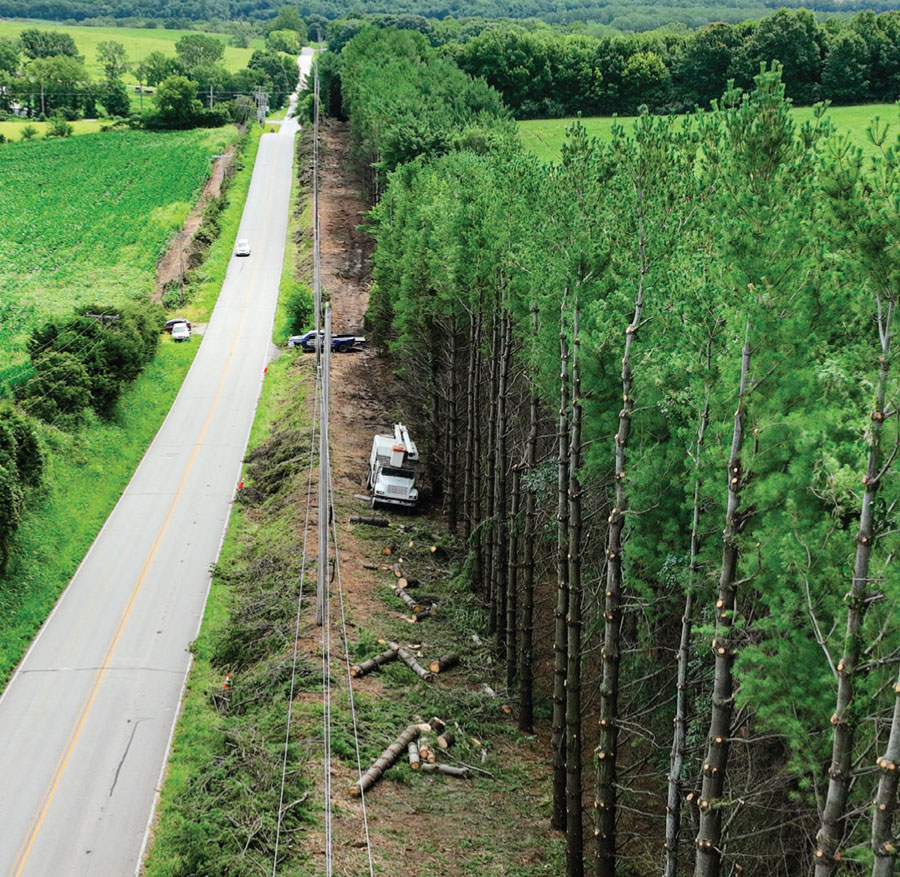
You can help, too. When planting new trees, consider their mature height and distance from nearby power lines. Trees that grow up to 40 feet should be planted at least 25 feet away from overhead lines. Larger trees, those that exceed 40 feet, should be planted at least 50 feet away. If you’re landscaping near padmounted transformers, keep shrubs at least 10 feet from the front and 4 feet from the sides to allow safe access.
Members can also help mow or clear brush on their property if they have concerns about spraying. If the right-of-way is well-maintained, there isn’t a need for PCEC to spray.
Also, if your neighborhood has underground lines, don’t forget to call 811 before digging. It’s a simple step, and the law, that can prevent serious accidents.
At the end of the day, we all want the same thing: a community that’s safe, resilient and beautiful. We’re happy to work with you on any questions or concerns you may have around our vegetation management program or right-of-ways. Feel free to contact me at the co-op, and I’d be happy to help.

Resources for Members Considering Solar
If a member is interested in solar, it is important to choose a reputable contractor/installer. Anyone falsely claiming to represent PCEC is a red flag that they are not reputable. PCEC does not partner with any solar companies. You can also visit our website, which has a comprehensive member guide for solar information, with important steps to take before installing.

PCEC is looking for members interested in participating in a co-op focus group. Participants meet a few times a year and have the opportunity to provide valuable feedback to staff members while learning more about the cooperative operations. Visit www.PCEC.coop/FocusGroup to apply today.



The Northland Connection is published monthly by Platte-Clay Electric Cooperative, Inc., 1000 W. 92 Highway, Kearney, MO 64060. Postmaster: Please send address changes to: Northland Connection, PO Box 100, Kearney, MO 64060 or mail@pcec.coop.
Platte-Clay is an equal opportunity employer.