



Hydropower a Historic Part of Our Generation Mix
 This summer, I proudly celebrated my 30-year work anniversary at Platte-Clay. It’s hard to believe how fast time can go by. I’m getting to the point in my career where I feel like I’ve been able to see most things in the electric industry. But this past month, I had the opportunity to tour a facility I’d never been to before: Bull Shoals Dam.
Located in northern Arkansas, the concrete dam is on the White River and forms the Bull Shoals Lake which extends into Missouri. This dam, along with dams in Missouri and Oklahoma, provide hydropower to Platte-Clay’s members through our generation partner, Associated Electric Cooperative, Inc. (AECI).
Alternative energy generation sources like wind and solar have become increasingly popular modern renewable options, but it is lesser known that hydropower electricity generation has been around since the late 1800’s.
The Bull Shoals Dam was originally constructed for flood risk reduction and power generation as part of Flood Control Acts of 1938 and 1941 by Congress. Construction began in 1947 by the U.S. Army Corps of Engineers and was completed in 1951. At the time it was built, it was the fifth largest dam in the world. The dam is 256 feet high and 2,256 feet wide.
The dam, still operated by the Army Corps of Engineers, produces about 800,000 megawatt hours of power annually. AECI receives about 25 percent of the dam’s generation capacity. The Southwestern Power Administration (SWPA), a government agency, wholesales the power within a six-state region that includes Arkansas, Louisiana, Missouri, Oklahoma, Kansas and Texas.
Since the early 1960’s, AECI has partnered with SWPA to receive a set allocation of hydropower for Missouri electric cooperatives. Like all renewable energy sources, it has intermittent availability. Hydropower generation is based on rainfall and the capacity of lakes and dams to store the water. Hydropower was responsible for 5% of AECI’s total generation mix in 2023. It is the lowest cost power source in its generation mix.
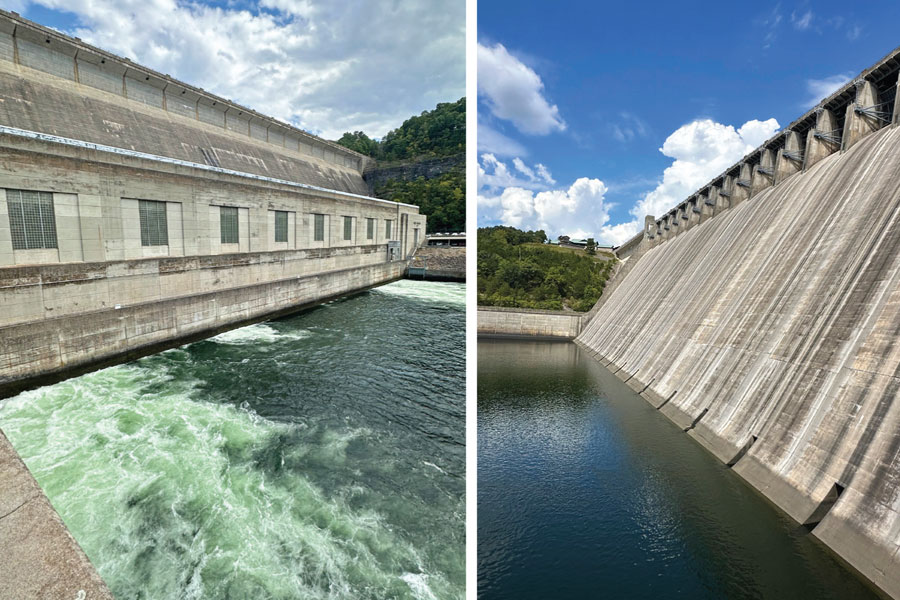
Bull Shoals Dam in Bull Shoals, Ark., helps provide power to Platte-Clay members.
I really enjoyed my time getting to see the inner workings of the dam and meeting with staff who help provide power to our members. While some of the generation equipment has been replaced or upgraded over time, much of the dam components and facility haven’t been modernized. It was like taking a step back in time to the 1950’s. It’s amazing everything still works so well from that era.
Today, the Bull Shoals Dam mission goes beyond just power generation and flood control. It also focuses on environmental stewardship, serves as a water supply, and is a popular destination for recreation like trout fishing.
Having diverse fuel sources contributes to the stability and reliability of our electric grid. The diversity allows for a more balanced and resilient energy system that can adapt to fluctuating demand and unforeseen circumstances.
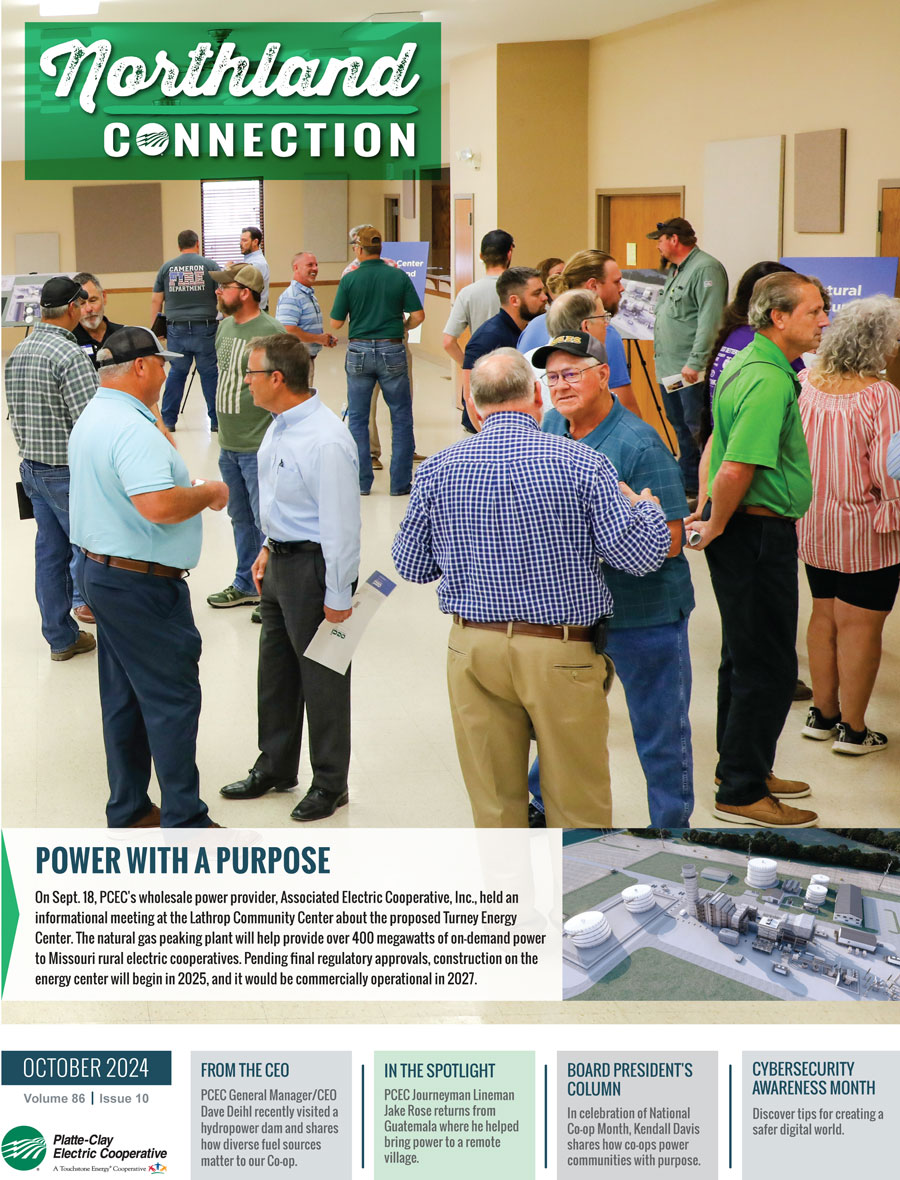
As our power consumption continues to grow, AECI is working to increase its system capacity. Construction is scheduled to begin in 2025 on a new natural gas peaking plant near Turney, Mo. AECI team members held an informational meeting at the Lathrop Community Center in September. I enjoyed visiting with our members who came out to learn more about the energy center. It will be yet another first for me to get to watch a generation facility be built and come online in our territory.
Similar to the Bull Shoals Dam, the Turney Energy Center will serve not only our members, but all rural electric cooperatives across Missouri for many decades to come.

Forging Powerful Connections
PCEC lineman has unforgettable international aid trip
Story by Edward Watson
Communications Director
Platte-Clay Electric Cooperative
Photos by Jim McCarty
Editor Emeritus
Association of Missouri Electric Cooperatives
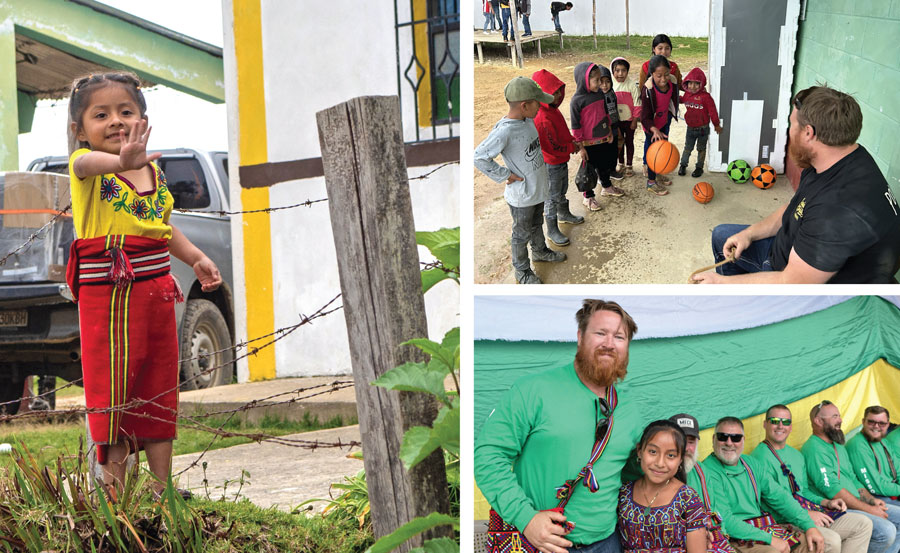
A sweet young Guatemalan girl waits patiently by a fence post. She is eager to wave and welcome back the group of visiting men helping her small village. She may not know where these curious men are from or fully understand the impact they’re making in her village, but she hasn’t missed this moment from this spot for two straight weeks.
Jake Rose was ecstatic when he received the much-anticipated news of being chosen to take part in an international trip helping bring power to a remote village in Guatemala. His excitement, however, immediately turned into nervousness once he realized what this meant. His wife, Molly, had just had a baby, so he’d be leaving her with a 2-year-old and a newborn for about 2-1/2 weeks and traveling nearly 2,000 miles away. While the timing was not ideal, she knew he’d been waiting for this opportunity for years and couldn’t miss out.
Rose, a journeyman lineman who has worked at Platte-Clay Electric since 2018, was selected this spring to be one of eight volunteer linemen from Missouri bound for Viucalvitz, Guatemala. He had heard about the Missouri Electric Cooperative International Program through other linemen at work.
“We’ve had several guys get to go from Platte-Clay years ago, and they really enjoyed their experience,” Rose said. “So, I’ve been wanting to go for a while. They said it’s really a humbling experience, so I thought it would be a cool place to see and get to help people out.”
Rose and seven other Missouri rural cooperative linemen traveled to Guatemala on July 31. The linemen were tasked with completing roughly three miles of primary overhead to connect to a nearby village previously wired by other cooperative linemen in 2020. They would be providing power for the first time to 130 families and businesses, along with a school and a medical clinic. They would also hang streetlights and wire 25-30 homes, each with a couple outlets and an overhead light.
The remote Guatemalan village is located in a mountainous area, and the terrain proved to be the most challenging part for Rose and the other linemen.
“The way it was described to us was to kind of think of Jurassic Park,” Rose said. “It was going be heavy vegetation and a mountainous area at over 7,500 feet elevation. They tried to explain the way the mountains were going to be, but they were a heck of a lot steeper than we all thought they would be. There were spots it was easier to slide down on your butt instead of trying to walk — it was that steep. Some spots on the line changed hundreds of feet in elevation at a time.”
The Missouri linemen had never worked together before, let alone in these conditions without many of the tools or bucket trucks they’re accustomed to in their daily work serving their local co-ops. They had to hike with 50-60-pound packs carrying their equipment along the pole route, and they had to climb each pole to hang the wire. But they quickly forged a bond and were able to navigate the many obstacles they faced each day.
“All of the guys were great to work with,” Rose said. “The great thing about being a part of AMEC (Association of Missouri Electric Cooperatives) is everyone receives the same training and knows how to do the work right, so it was easier than I thought it would be to work with a whole new crew. There were times when we didn’t have the materials we would usually have, but we had to come up with different ways to make the materials we had work.”
The local men of the village all pitched in to help each day and had placed many of the poles in advance of the linemen’s arrival. Their resourcefulness and hard work proved crucial to the success of the trip.
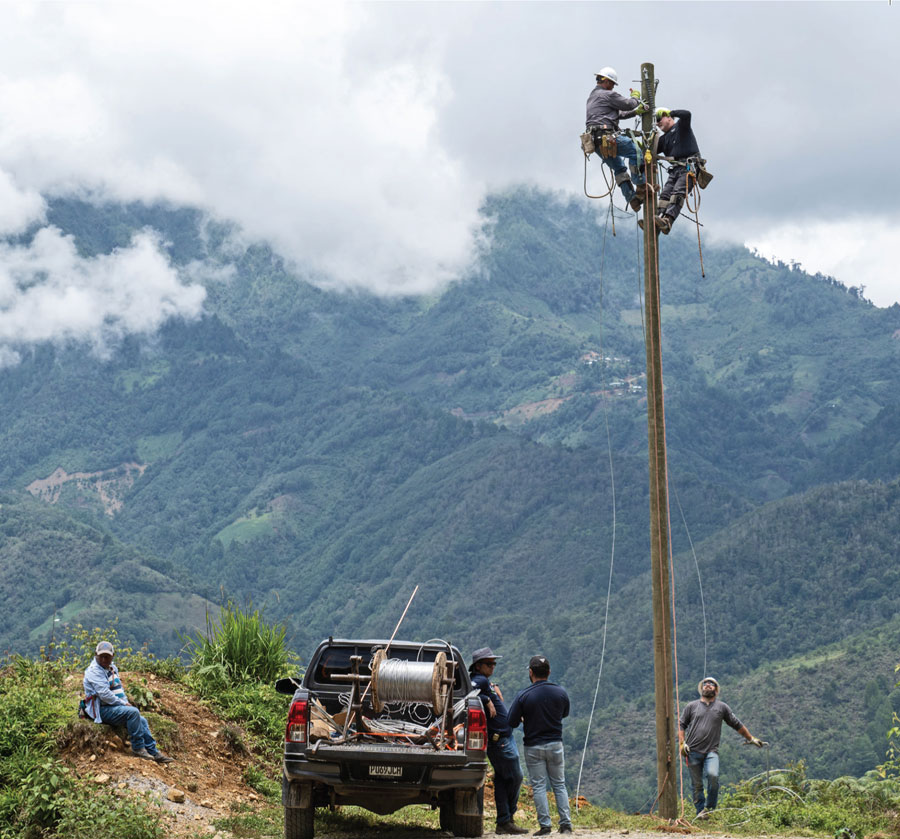
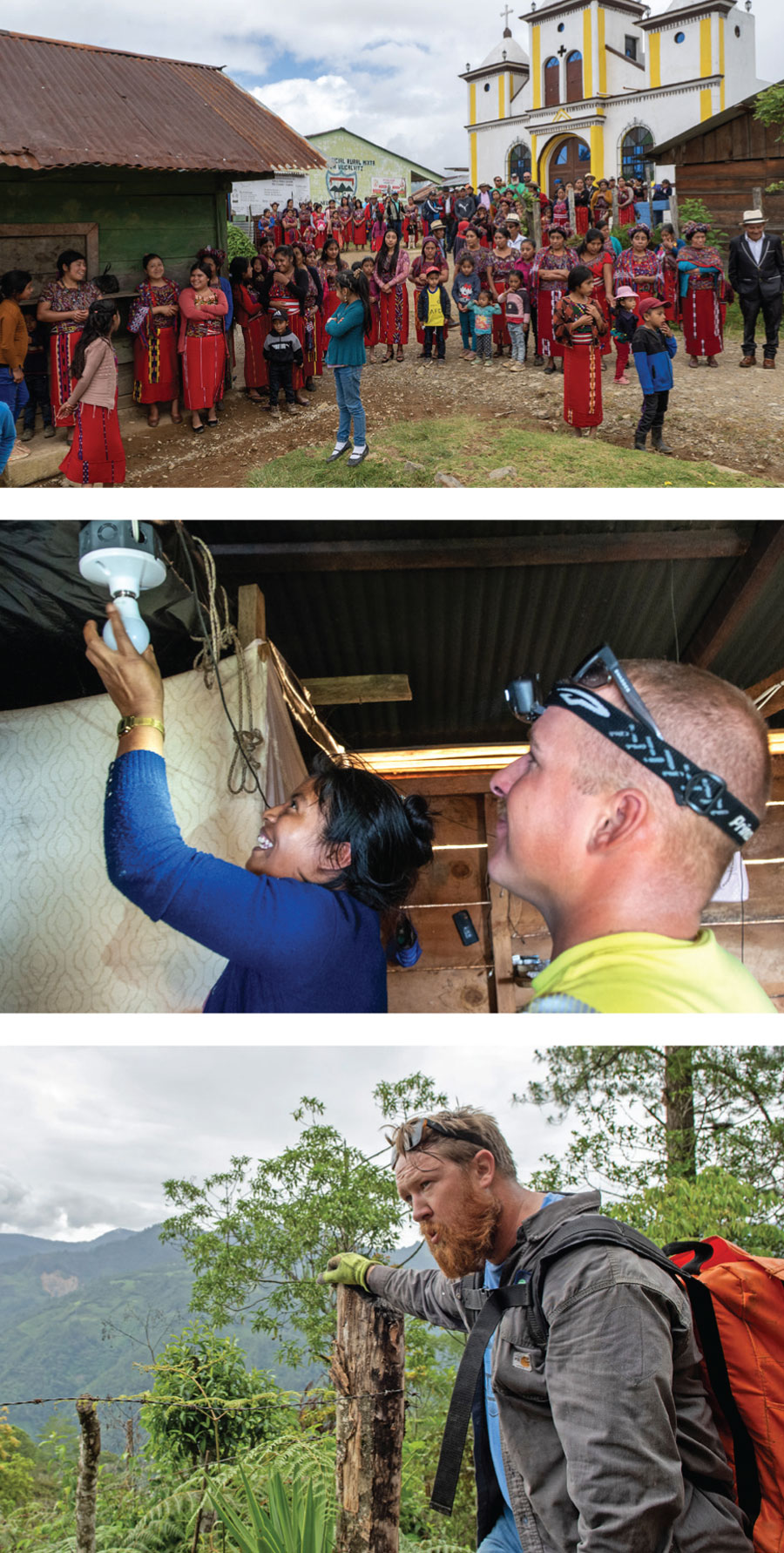
“The villagers were awesome,” Rose said. “It was cool to see how they caught on so quickly and were able to help us out. They weren’t afraid of work. If it wasn’t for the villagers, we may have only gotten a mile of line done.”
The linemen made the village schoolhouse their home over the course of the trip. Inside was about a 20×20 feet open area. They slept on cots and sleeping bags, which made the experience a lot like camping. The group shared one generator to charge their tool batteries and cell phones each night.
Rose says the most impactful part was spending time with the villagers inside their humble homes as they helped wire electricity for the first time. He learned a lot about the hardships they face in their daily lives.
“In the houses, they were probably about as big as most people’s offices,” Rose said. “The families could have two to four kids. They have dirt floors. The houses are made of just wood they cut. They had open fires in the homes so they were smoky. So, it was humbling to see how they live. The women make their own clothes and most of the men would hop on a bus for a couple hours early in the morning and go work for the day and take the bus back after dinner time. They don’t make very much money. The interpreter said most of the men working in the city do well to make $500 a month and that’s for basic jobs like a mechanical or construction worker.”
In the end, the linemen successfully wired the three miles of line and brought power to the village. The village, in turn, provided Rose and the other linemen a transformational once-in-a-lifetime experience.
“Hopefully they’ll be able to get more done around their house, maybe spend more time with their kids,” Rose said. “I learned to be happy for what I have and that I’m blessed with a great family for letting me go on this trip. There are a lot of things we take for granted here in the states. We have a lot available at our fingertips.”
With the job done, Rose couldn’t wait to reunite with his wife and his two young daughters. Jake and Molly’s parents had pitched in to help with the kids and it all ended up working out great. Jake shared the many photos of everything he’d seen on his journey. He told the stories of the people he was fortunate to meet and would never forget. One of those special people was the young girl by the fence post.
The weary linemen slowly made their way back home into the village along the winding dirt road. The men already knew who would be waiting to greet them by the fence post. The sweet little girl begins to smile and wave excitedly to the men as they return home from helping bring light to her world. She welcomed them the same way in the same spot each day of the their trip. There’s nothing quite like a familiar warm welcome to create a memorable moment — one the linemen and the girl will surely not forget. For they had been forever bonded by the power of kindness.
View more photos from Jake’s trip here.

Co-ops Power Communities with Purpose

Kendall Davis
Board President
Communities come in all shapes and sizes. Some are based on geographical proximity, some are based on shared interests or hobbies. Regardless of where or how they are formed, communities can bring people together and create a sense of belonging.
Platte-Clay is deeply committed to our consumermembers, and we’re glad you are part of the electric cooperative community.
This October, more than 30,000 cooperatives across the U.S. are celebrating National Co-op Month. It’s a time to reflect on all the aspects that set cooperatives apart from other types of businesses, but more importantly, it’s a time to celebrate the power of co-op membership.
Electric cooperatives are not-for-profit utilities that are built by the communities they serve. For Platte-Clay, their mission has always been to provide you with reliable power. We care about your quality of life, and because we are locally operated, we’re uniquely suited to meet our members’ evolving energy needs.
Beyond the business of electricity, the employees and directors are equally invested in our local community. Why? Because we live here, too. That’s why we work hard to support local economic development projects, youth programs and scholarships, charitable giving initiatives and additional programs that make our community a better place to call home.
All co-ops, including Platte-Clay, are guided by seven cooperative principles that embody the values and spirit of the cooperative movement. These seven principles are a framework to help all co-ops navigate challenges and opportunities while remaining true to our purpose:
- Open and Voluntary Membership: Co-op membership is open to anyone who can use the coop’s services.
- Democratic Member Control: Members make decisions that shape the cooperative. Why? Because co-ops are created by the members, for the members.
- Members’ Economic Participation: Members contribute money to the co-op to make sure it runs smoothly now and in the future. At Platte-Clay, this happens through paying your energy bills.
- Autonomy and Independence: Co-ops are independent and can operate on their own, which ultimately benefits the members.
- Education, Training and Information: Coops continuously focus on education to ensure employees have the training and information they need to make the co-op successful.
- Cooperation Among Cooperatives: Co-ops share with and learn from other cooperatives. We help each other out in times of need because we want other co-ops to thrive.
- Concern for Community: All cooperatives work for the greater good of the local communities they serve. Co-ops give back to their communities to help them thrive and grow.
This October, as we celebrate National Co-op Month and the power of membership, we hope you will recognize the many aspects that set electric cooperatives apart. Our mission is reliable power. Our purpose is people––the local communities we’re proud to serve.



The Northland Connection is published monthly by Platte-Clay Electric Cooperative, Inc., 1000 W. 92 Highway, Kearney, MO 64060. Postmaster: Please send address changes to: Northland Connection, PO Box 100, Kearney, MO 64060 or mail@pcec.coop.
Platte-Clay is an equal opportunity employer.