




Balancing Electricity Supply and Demand
 Electricity is essential for nearly every aspect of daily life––so essential that we rarely think about how it’s produced and delivered to our homes. You might be surprised to learn that behind the scenes, a network of experts is working daily to anticipate how much electricity you need before you even use it.
We’re all connected to the electric grid, so ensuring the right amount of electricity for all involves a complex process of forecasting energy demand, planning for capacity and securing enough supply to meet Americans’ needs.
First, electricity must be generated at a power plant using either traditional sources, such as coal, natural gas or nuclear energy, or from renewable sources, such as solar, wind or hydropower.
At Platte-Clay, we work closely with Associated Electric Cooperative, Inc. (AECI) our local wholesale power partner, to secure enough electricity for our communities, using a diverse mix of energy sources to generate the power we deliver to your home or business. By maintaining a diverse energy mix—coal, natural gas, wind and hydropower—Platte- Clay has options to ensure reliable power at a competitive cost.
On a larger scale, across the country, electricity supply and demand are managed through a market that includes long-term planning agreements, where electricity is bought and sold just like other common goods and services. Because Platte-Clay works with our wholesale power partner, which is also a cooperative, we are able to pool resources and expertise to deliver affordable power to our local communities.
Electricity supply changes throughout the day because demand fluctuates based on consumers’ needs. For example, we know that we need to ensure more electricity in the mornings when you’re starting your day, and in the evenings when you’re cooking dinner, running appliances and watching TV. Demand also increases when weather patterns change, such as extremely warm or cold temperatures.
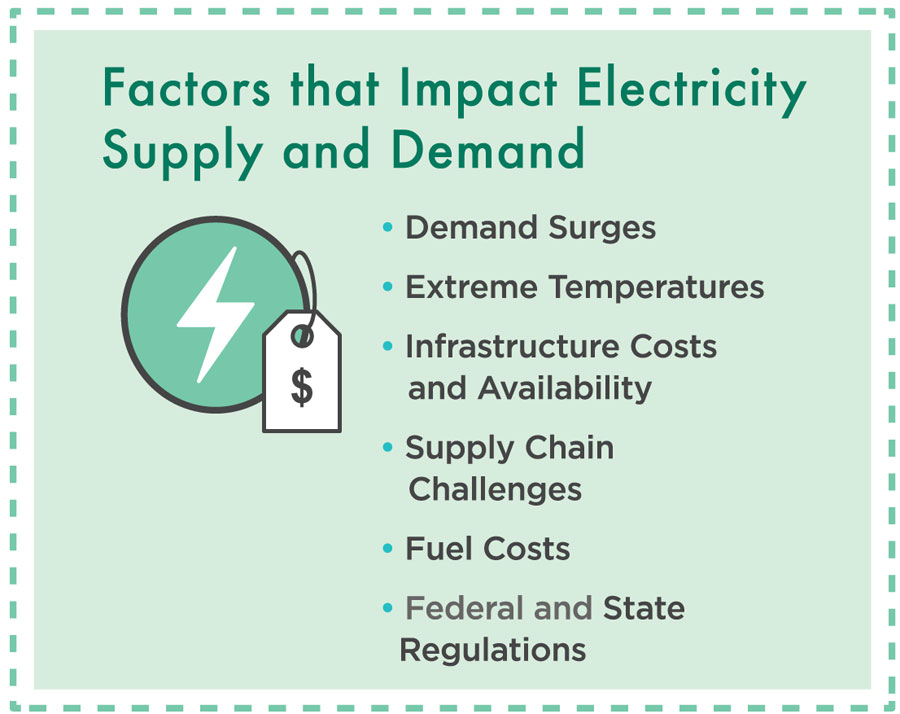 Across the country, other electric utilities are managing the same task of balancing supply and demand, which is why we have a larger network of key players in place to ensure enough power is delivered across the grid.
In most cases, the amount of electricity generated and how much is sent to specific areas are coordinated and monitored by regional transmission organizations (RTOs) and independent system operators (ISOs). In other areas, individual electric utilities perform these tasks.
RTOs, ISOs and electric utilities act as air traffic controllers for the electric grid. They forecast when you, your neighbors and communities across a large region will need more power. These organizations take measured steps to ensure there’s enough supply to meet demand.
As the energy sector undergoes rapid change, it’s important for all consumers to understand the basics of electricity supply and demand. Electricity use in the U.S. is expected to rise to record highs this year and next, with the demand for electricity expected to at least double by 2050. At the same time, energy policies are pushing the early retirement of always-available generation sources, which will undoubtedly compromise reliable electricity.
Platte-Clay remains committed to providing affordable, reliable energy to the members we serve. That’s why we are preparing now for increased demand and other challenges that could compromise our local electric supply.
AECI is currently in the process of bringing a new natural gas plant to Turney, Mo., in our service territory, to reinforce its dispatchable fleet of energy resources during times of peak demand. NW Electric Cooperative, our transmission partner, is in the process of working with other electric utilities in the Midwest to increase transmission capacity in our region to meet changing energy needs.
Here at Platte-Clay, we are a distribution cooperative, so our focus is dedicated to everything at the end of the line. We build, manage and maintain the distribution lines that bring power from the substations to your home or business. I always feel it’s important to ensure our members understand the larger picture that helps make it possible for your lights to turn on. It takes a vast network of manpower and resources to bring you reliable, safe power. We’re fortunate to have a great network of utilities, power plant operators and energy traffic managers in place to direct the electricity we need and keep the electric grid balanced.


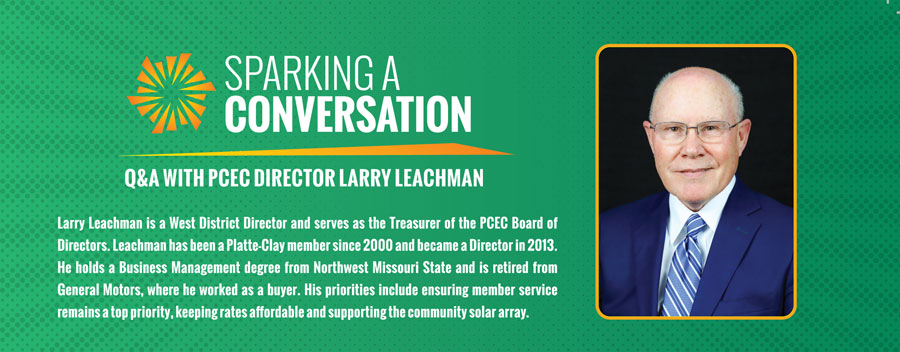
Q. What is your favorite part of serving on the PCEC Board?
A. I would say interacting with the staff and the other Board members is my favorite part. I get to stay connected to the business world, and hopefully my input is helpful.
Q. What goals do you have as a Director to impact the Cooperative?
A. We need to keep an open mind about emerging technologies concerning renewable energy. I think we need to embrace new technologies as long as they offer reliability and affordability. Reliability should remain the top priority.
Q. How does your career experience help you in serving on the Board?
A. I worked in manufacturing my entire career and as a purchasing agent I worked with all departments in the plant. I think this helps me understand employees’ concerns in all areas of the Co-op. The basic business principles are the same.
Q. How do you approach making tough decisions on behalf of all Cooperative members such as budget decisions?
A. First and foremost, you have to ask yourself what is best for the health of the Co-op, even if it might negatively affect you as a member, such as a rate increase. One must make sure to listen to all discussions between the staff and Board members and make the best decision that you can.
Q. What do you think the Cooperative is doing well?
A. First, the focus on safety is very important, and I think there is no co-op that does it better. Secondly, making the investment necessary to ensure reliability. Thirdly, serving and connecting with the community is important and the Co-op does a great job of that.
Q. What are you most proud of accomplishing during your time serving the Co-op?
A. I think the decision to have Dave Deihl become the CEO was certainly one of the Board’s most important decisions during my time as a Director. It has led to a more focused culture of safety and transparency. Developing strategic planning sessions with the staff leadership and Board has led to specific goals and a system for following up on them. This has helped the Coop stay focused on these goals.
Q. You represent PCEC on the NW Electric Cooperative Board, which is PCEC’s transmission partner. What has that experience been like?
A. I’ve really enjoyed it. Their Board is made up of the general manager and one board member from each of the seven cooperatives they serve. I appreciate the rural electric cooperative three-tier system more than I used to. The tiers separate the roles of generation, transmission and distribution. I have gained an appreciation of the vastness of NW’s transmission system. They have 120 substations. It is not an easy job. I’ve enjoyed making connections and building relationships in the regional cooperative system.
Q. What would you like to make sure members know about the Board or PCEC operations?
A. Members should know that the PCEC Board is made up of people with diverse backgrounds and a good mix of ages. Each Director brings a different life and work experience to the table which makes the Board, I think, stronger. Members need to know they have a strong Board representing them.

Positioning Our Co-op for Future Strength

Kendall Davis
Board President
I hope everyone had a wonderful holiday season spending time with family and friends. We are excited about a new year here at Platte-Clay. With 2024 in the books, I’m proud of all the great accomplishments the Co-op experienced last year. We continued our strong track record of reliability, safety and commitment to serving the community.
I feel immense pride when hearing positive feedback from neighbors and friends about our Cooperative. A lot of hard work goes on behind the scenes to make us one of the best co-ops around. The Board of Directors and PCEC employees are committed to ensuring we remain as strong as ever.
Over the last couple of months, Platte-Clay’s leadership presented their annual budget report and financial forecast to the Board of Directors. The Directors are responsible for approving the budget at the December Board meeting that the staff executes over the course of the upcoming year.
As part of the budget process, we work closely with our generation partner, Associated Electric Cooperative Incorporated (AECI), and our transmission partner, NW Electric Power Cooperative, to evaluate future planned expenses. Wholesale power costs are the largest expense PCEC incurs and make up roughly 60 percent of total expenditures.
As the demand for electricity grows, more transmission and generation are needed to meet the needs of rural electric cooperatives. Along with this, the costs to produce energy have continued to increase in the current inflationary environment. Both AECI and NW Electric are raising their rates for this year to expand services. As rural electric cooperatives similar to PCEC, they don’t charge more than they need to because any profits are returned to their member-owners, which for them is their member cooperatives, including PCEC.
After evaluating the impacts of these increases on the Co-op’s 2025 budget, we would experience negative operating margins without a rate increase. To ensure the financial stability of the Cooperative, the Directors voted unanimously in December to approve a 9% increase in overall revenue for 2025. New rates won’t go into effect until your April usage and then will be reflected on your May bill.
Our last rate increase was in 2023, and we have only had three other increases in the last 15 years. If you total up the increases since 2009, Platte-Clay rates have only risen an average of 1.47% per year.
The average Platte-Clay monthly member bill is $158.78. With new rates, the average bill would see an increase of $14.29 a month or about 48 cents a day.
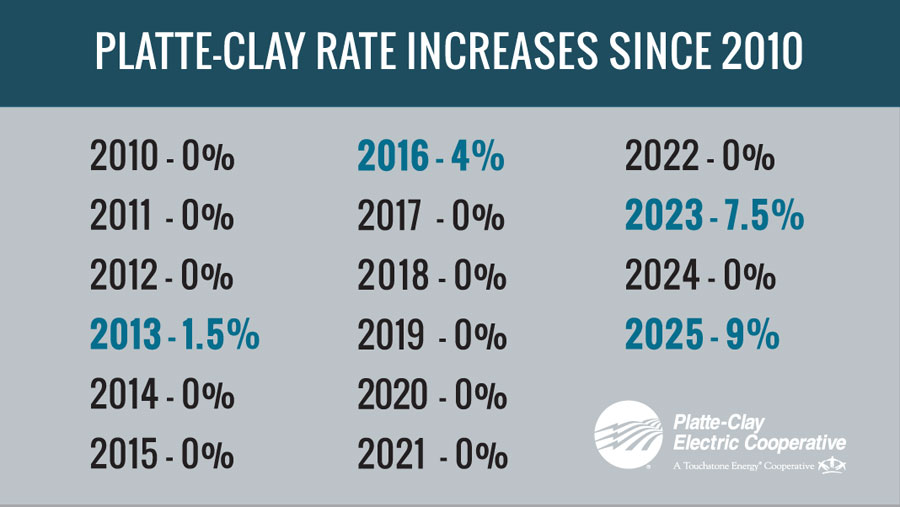 Platte-Clay is not alone in rising electricity costs. Evergy is currently requesting a rate increase of over 13% for its Missouri West customers through the Missouri Public Service Commission (PSC). Ameren Missouri is currently requesting a rate increase of over 15% with the PSC.
With PCEC’s demand-based rates, members will still have the opportunity to reduce their bills by controlling their peak monthly demand. This involves things like not running multiple household appliances at the same time. PCEC shares energy efficiency tips throughout the year in their newsletter and on social media. And you can track your demand online through PCEC’s account management tools on their website at www.pcec.coop.
Electricity is so crucial to everyday life. We must maintain a strong Cooperative as we are beginning to see signs that we are entering a new era for electricity consumption and generation in our country. Emerging industries like AI are powered by massive amounts of electricity, and generation and transmission are going to continue to be hot topics on the national stage as the energy industry grapples with balancing the need for traditional fossil fuel generation with new generation technologies.
I believe PCEC, along with our generation and transmission partners, are positioning ourselves to operate in a position of strength rather than weakness. AECI and NW Electric increasing their generation and transmission capacity will only make our system more reliable for members in the years to come.

Board Interest Deadline:
Any consumer-member interested in running for the PCEC Board of Directors this year must submit their name to the co-op by Monday, Feb. 3, 2025. To contact the co-op with your interest or if you have questions about the process, please email PCEC Human Resource Director Angie Kinard at angiek@pcec.coop.
If a member misses the initial interest deadline of Feb. 3, they may submit their name via petition with 15 member signatures by Thursday, March 20 in order to still make it on the ballot.
PCEC will begin annual election voting in May. Members will be able to vote online again this year, with a paper ballot option available. Members can also vote in person at the annual Business Meeting May 29, when results of the election will be announced.
Youth Tour Contest and Scholarship Applications:
March 7 is the deadline for our annual Youth Tour Contest for area high school juniors. Learn more about the Youth Tour contest and apply online by visiting www.PCEC.coop/YT.
In addition, PCEC will once again be giving away three $1,000 higher education scholarships to high school seniors or undergraduates who are pursuing a degree that could be used in the electric power industry. The application deadline for this is also March 7. Applications can be submitted at www.pcec.coop/scholarship.



The Northland Connection is published monthly by Platte-Clay Electric Cooperative, Inc., 1000 W. 92 Highway, Kearney, MO 64060. Postmaster: Please send address changes to: Northland Connection, PO Box 100, Kearney, MO 64060 or mail@pcec.coop.
Platte-Clay is an equal opportunity employer.