



Strategic and Intentional Reliability
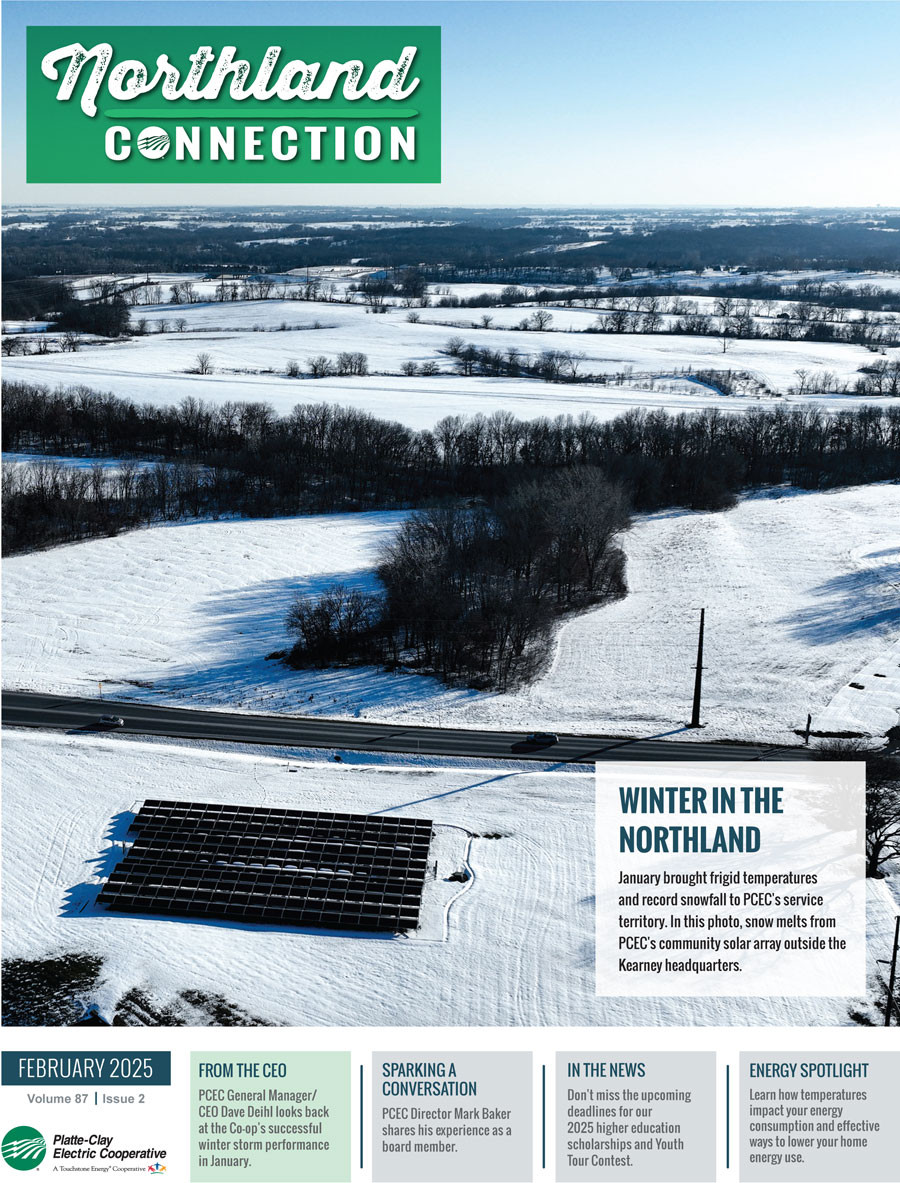
 You never quite know what a new year will bring, and this year we kicked it off with a blizzard. Not just any blizzard, either. The National Weather Service reported that on Jan. 5 we had the fourth largest single-day total in Kansas City’s history, and the most snow since 1962.
Typically, this could mean a whole lot of trouble for an electric utility. Our staff met the week before the winter storm to review our comprehensive emergency action plan and discuss individual and team responsibilities. The plan is laser focused on restoring power in the safest and most efficient manner. Our team worked diligently to ensure we were fully equipped to handle any challenge while maintaining reliable service for our members. For example, we had backup linemen on standby as well as hotel rooms and meal arrangements planned in the event additional crews were needed to restore outages in the days after the storm.
PCEC staff closely monitored the storm throughout the weekend and, fortunately, PCEC experienced only two individual outages affecting two members. One on Saturday and one on Sunday. Both were resolved relatively quickly given the conditions.
We received an overwhelming amount of positive comments from members. One member shared on social media, “Do you know why your system is unaffected? Because you care about the people who you represent. I’ll never live somewhere you don’t serve.” Comments like this are rewarding for our team and show we are fulfilling our duty to serve members and do things the right way.
While we can never fully know or guarantee how our system will perform in the face of any weather event, a whole lot of intentional strategy and resources go into delivering results on days like we had in January.
I attribute a lot of our success to our infrastructure work plan. Each year we devote a significant amount of resources to maintaining and upgrading our system.
We have a strong vegetation management program that is a systematic approach to help mitigate hazards that threaten our power lines. We’ve prioritized and ramped up our program over the last couple of years, and it’s beginning to pay dividends in reliability. In 2025, our budget for trimming and spraying will be just over $2.2 million.
We do more than just trim trees, too. We have a comprehensive work plan to ensure our infrastructure is upgraded before problems arise, and is ready for future growth throughout our service area.
- The total 2025 capital budget for our electric plant is $12.3 million. This includes everything in our electric distribution infrastructure. (Transformers, meters, reclosers, regulators, pole upgrades and replacements, security and street lights, overhead and underground conductor, and new services.)
- Pole inspection program: We partner with Lee Pole Inspection to inspect 10% of our utility poles each year, with all poles inspected over a 10 year period. They will inspect 4,000 poles in 2025, and we plan to replace approximately 125 poles as part of this process.
- Conductor replacement program: Another important part of our work plan is to proactively replace our actual power lines. We have a total of 3,118 miles of line and we have plans to replace approximately 30 miles of overhead and 2 miles of underground lines in 2025.
- NW Electric, our transmission cooperative, replaced the aging Cameron substation in 2024. Plans are in place to add a new feeder out of our Barr substation in Kearney in 2025 to prepare for growth in the area.
While we’ve been diligent with our vegetation management, routine maintenance and system upgrades, there’s also another reliability powerhouse operating behind the scenes — our Engineering team manages a robust Supervisory Control and Data Acquisition (SCADA) system. This technology is the software and hardware system we use to gather data about system operations and manage our distribution grid from our office. We can often catch problems before they become outages, and we can also restore outages more effectively when they do occur.
Technology plays a crucial role in everything we do these days. Our information technology team has put a lot of effort into setting our staff up with secure infrastructure to be able to work remotely to monitor our system and support members in the event of large outages during nights and weekends.
Associated Electric Cooperative, our power provider, is also constantly planning and forecasting to make sure they are able to generate the power that their cooperatives require. They are currently in the process of helping ensure future system capacity by building two new natural gas peaking plants in Turney, Mo. and in Ripley, Okla.
Every one of these items has to work seamlessly all the time for our members to have electricity at the flip of a switch. As you can see, there is a lot of planning and coordination behind the scenes to ensure the reliability our members have come to expect. Especially in the instance of a severe winter storm, these investments, planning and proactive maintenance pay significant dividends in maintaining reliable service during extreme conditions.


Q. What has it been like for you serving in your first term as a PCEC Board member?
A. I would say interacting with the staff and the other board members is my favorite part. I get to stay connected to the business world, and hopefully my input is helpful.
Q. What goals do you have as a director to impact the cooperative?
A. I’ve met some great people, and I’ve had the opportunity to better understand and learn how the three-tier cooperative system works in Missouri. I’ve had friends and relatives work at NW Electric, so I knew of them, but I really didn’t understand how they fit together, so being on the Platte-Clay Board has really helped to see how everything works. I’ve been on an insurance board with Jim Jura, the past CEO of Associated Electric Cooperative, so I got to know him. And all of that has come together and really come full circle for me serving Platte-Clay. We have a great system of cooperatives that serve our members. The cooperative world is different than the retail or for-profit businesses and that has been enlightening.
The board is great to work with, the staff has been top-notch and leadership here is phenomenal. I think it is the top leadership in the state from what I’ve been around and seen. It is always fun to be a part of a winning team.
Q. How does your job or career experience help you in serving on the PCEC Board?
A. I am fortunate to serve on several boards. Being an insurance agent I have a lot of customers that have various occupations and operations, and since insurance is a risk transfer, I have to understand their businesses financially and the mechanics of how they work. This helps me be effective with the boards I’m on, such as the co-op.
Q. What is your favorite part of serving on the board?
A. My favorite part of the job is assisting with the decisions and advice to management. I like to not just be able to identify problems but also be mechanical and find solutions to it. I thin k that’s what a good board member is supposed to do.
I’ve been on startup boards and established boards and whenever you have a smooth-running board like this it makes it a lot easier for the directors to assist and advise like we’re supposed to with a well-run machine. We don’t have to reinvent the wheel, the wheel’s already turning.
Q. What do you think the cooperative is doing well?
A. It’s hard to find what we aren’t doing well. We have a great distribution system, we’ve got great members, we are in a growth area, we’ve got wonderful tenured employees, the management’s fantastic, so I just don’t know where I’d mark any improvement necessary. When the ball’s rolling and rolling well you just hope to keep it refined and keep it going downhill.
Q. How do you approach making tough decisions on behalf of all cooperative members such as rate increases or budget decisions?
A. That’s part of the co-op way, you have to always do what’s best for the co-op. You have to do what’s good for the health of the business. If the cooperative isn’t here, our members aren’t here, and they don’t have the power they need. So, we have to be sustainable to ensure members get the power they need. You have to look at the balance of the health of the business and the availability of the product to your consumers.
It’s a three-legged stool. It takes the co-op, the members, and the board to keep that stool upright. Without one of those legs, it falls over. You have to keep that balance. There are hard decisions that have to be made, but if you make them with the right intentions then it benefits everybody in the long run.
Q. What are goals you have as a PCEC Board member to impact the cooperative?
A. I think my main goal is to keep getting more educated to help make better decisions. Going to different meetings, you get to talk to board members at other co-ops and gain perspective about how other operations work. You can find out what you’re doing well in, or maybe ways to improve, so my goal is to continue to learn to become a better board member.
Q. What would you like to ensure members know about the board or PCEC’s operations?
A. Since I’ve been on the board, several of my customers and neighbors have talked to me about being on the board. I don’t think many people understand how the power gets here and the sacrifices the employees make to keep it going because it’s just always there. So, I always try to make people more aware of the great work that goes on here because there is a lot that goes into it.
As for the board, they’re not getting rich here on board pay, they’re doing it for their desire to help and be a part of positive decisions and help their neighbors and our area.

Applications for Higher Education Scholarships Due by March 7
Scholarships available for students pursuing degrees in the electric power industry
Do you know a student interested in or currently pursuing a degree in the electric power industry? Each spring, PCEC awards three $1,000 scholarships to deserving local undergraduate students.
There will be one winner chosen from each of our three service districts. The scholarship program focuses on students accepted or enrolled in a two or four year accredited college or trade school, and pursuing a career in the electric industry.
This industry is in high demand and there are a wide range of exciting career opportunities available, from engineers to lineman, that offer great compensation and job security.
Eligible degrees include occupations such as line work, engineering, business, human resources, marketing, finance, accounting and information technology.
Applicants have to fill out a student profile and write a short answer about an attribute or achievement that sets them apart. The deadline for scholarship applications is March 7, 2025.
To apply for a scholarship, the applicant must be a PCEC member or family member and permanently reside within PCEC’s service area. The application is available online at PCEC.coop/Scholarship.
PCEC is proud to support youth development across the Northland. The cooperative helps grow the next generation of Northland leaders by supporting teacher education events, extracurricular organizations, student athletics, leadership conferences and scholarships. Platte-Clay also provides free safety demonstrations and career presentations to school and community groups.

High School Juniors Youth Tour Contest Deadline Approaching
High school juniors have the opportunity to win a free trip to Washington, D.C. by participating in Platte-Clay Electric’s 2025 Youth Tour contest. Students must submit a video or short essay by March 7, 2025. The question for the 2025 contest is: “What makes cooperatives unique, and how would you explain membership to someone in your community?” PCEC will choose 6 local high school juniors to represent the co-op at leadership conferences in Washington, D.C. and Jefferson City this summer. Youth Tour essay contest applications are due March 7, 2025. For more information, visit PCEC.coop/YT.
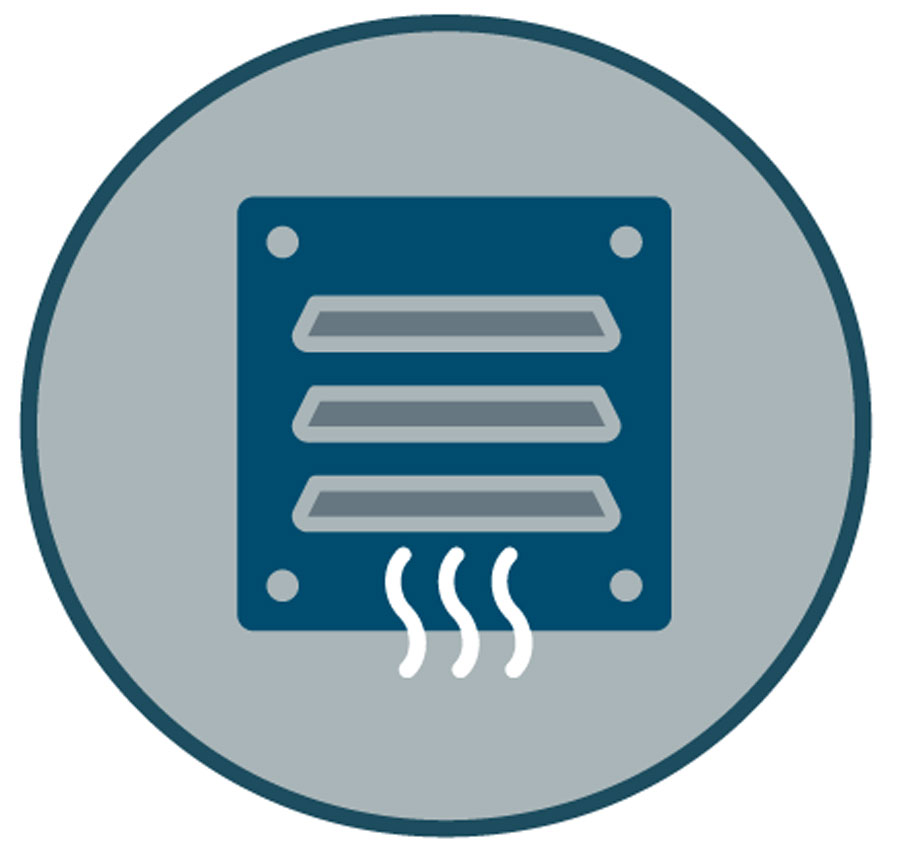 Taking steps to help your home heating system run more efficiently can reduce energy use and lower your winter bills. Check to see if any air vents around your home are blocked by furniture, curtains or other items. Obstructed vents force your heating system to work harder than necessary and can increase pressure in the duct work, causing cracks and leaks to form. If necessary, consider purchasing a vent extender, which can be placed over a vent to redirect air flow from underneath furniture or other obstructions.
Source: energy.gov

PCEC’s Annual Cooperative Election Timeline
MARCH 6 –
Director Nominating Committee meeting
MARCH 20 –
Deadline for petition candidates to submit 15 member signatures to get on ballot. If a member missed the initial interest deadline of Feb. 3, they may submit their name via petition with 15 member signatures by March 20 in order to still make it on the ballot.
APRIL
PCEC election guide will be printed in the Northland Connection
MAY 1 –
Online and mail-in voting begins
May 29 –
Voting closes at annual business meeting, results announced



The Northland Connection is published monthly by Platte-Clay Electric Cooperative, Inc., 1000 W. 92 Highway, Kearney, MO 64060. Postmaster: Please send address changes to: Northland Connection, PO Box 100, Kearney, MO 64060 or mail@pcec.coop.
Platte-Clay is an equal opportunity employer.