


July 2018 | Volume 80 | Issue 7
Renewable Energy Credit Program
Renewable Energy Credits are part of Platte-Clay and Associated Electric Cooperative’s (AECI) commitment to encouraging members to help provide renewable solar and wind energy.
Members who are interested in participating may call the office to start the program, which is an additional .025 cents/kilowatt hour.
With Platte-Clay’s low rates, it’s inexpensive for a home or business to go green.
 Why pay more for green energy?
In general, the businesses and families that participate in the Renewable Energy Credit program are those who feel they have a responsibility to a cleaner environment and are willing to pay a little more to help encourage clean energy and to demonstrate their environmental commitment.
Here’s how the program works.
When the Bluegrass Ridge Wind Farm, for example, generates one megawatt-hour, which is 1,000 kilowatt-hours of electricity, AECI records that renewable energy credit (REC).
The RECs are trued up each year and retired because the environmental benefits were used over the course of the year.
When a member becomes part of the renewable energy credit program, AECI assigns the REC to them, based on the number of units purchased.
The process is reviewed by Associated’s internal and year-end financial audits.
Once those numbers are finalized, Platte-Clay provides a certificate showing the amount of clean energy attributed to that members.
The certificate, sent annually, is suitable for framing.

The Bluegrass Ridge Wind Farm generates RECs for members.
What’s next?

Dave Deihl, General Manager
From the General Manager
What’s next is a question that your Board and management ask at our monthly board meetings, at the state rural electric cooperative meetings, at national rural electric cooperative meetings.
And what’s next looks a lot like electric vehicles, EVs, will be moving in to homes and into fleets over the next few years as they gain acceptability and manufacturers make more models available. We think that’s what’s next.
Many of you saw locally owned EVs displayed at the annual meeting—including Teslas, Volts, Bolts and a battery-powered VW.

We know that manufacturers are getting serious about electric vehicles (EVs) when they start a racing program. This custom-built VW I.D. R electric race car driven by Romain Dumas won the 2018 Pikes Peak Hill Climb June 24 setting a new speed record of 90.538 mph, 7:57.148 over the 156-turn, 12.42-mile course. Photo courtesy Drew Phillips via Autoblog.
Because of our convenient location north of Kansas City, we see EVs with out-of-state license plates charging at the fuel station in Kearney; our location is on a national map of charging stations.
Because of the projected EV growth, Platte-Clay now is doing the research and analysis and reviewing the long-term industry and infrastructure plans in the U.S. and even in other nations.
The automobile industry says that it now is spending at least $19 billion in the U.S., $21 billion in China and $52 billion in Germany. Much of the push toward EVs is to help auto manufacturers meet the requirements in Europe and California to reduce carbon emissions from fossil fuels.
Although we’re at the preliminary stages of the automobile industry’s transition to primarily EVs, it’s the best time for an electric cooperative to plan for the future.
For example, we’re considering industry projections as we analyze how electric vehicles may affect Platte-Clay. GM plans on selling 1 million EVs a year by 2026, including electric trucks and SUVs. Toyota projects 5.5 million EVs and hybrids by 2030. Ford says it plans to double its spending for electric vehicles, and we’re seeing more EVs on the streets and highways.
 While on one hand the long-term projections seem like the distant future, building lines, projecting demand, analyzing vehicle buying trends along with building and housing trends are all important factors as we move to a new chapter in the automobile and housing industry.
Contractors now are building new subdivisions with homes that include charging stations and new businesses are adding charging stations as a perk for employees.
Some companies are including EVs in their fleet mix.
All these activities put Platte-Clay square in the middle of this transition: if the “fuel” that an EV uses is electricity, then Platte-Clay, and other rural electric cooperatives are part of the equation.
As always, if you have questions or concerns, please let me know. Please e-mail generalmanager@pcec.coop
Youth Tour activities offer Washington, D.C., learning experiences
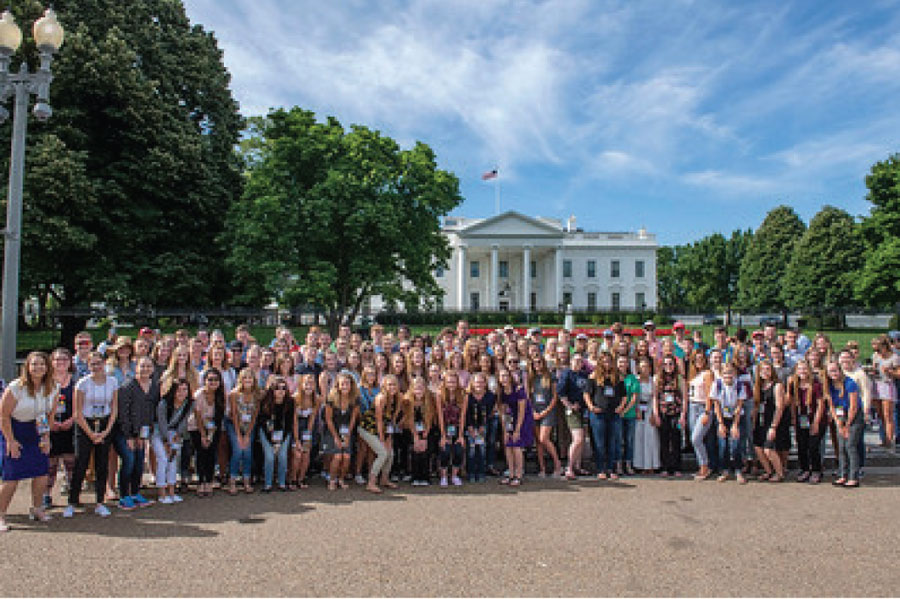
Missouri’s best and the brightest. Youth Tour class of 2018 stop for a moment and a group photo.

There’s nothing quite like the solemn tributes to those who sacrificed, fought and died for the United States to bring a sense of appreciation for the freedom enshrined in our Constitution.

There were more than 58,000 U.S. military casualties in the Vietnam War, with most of them remembered and inscribed in the Vietnam Wall. Missouri lost more than 1,400 military personnel during the war.
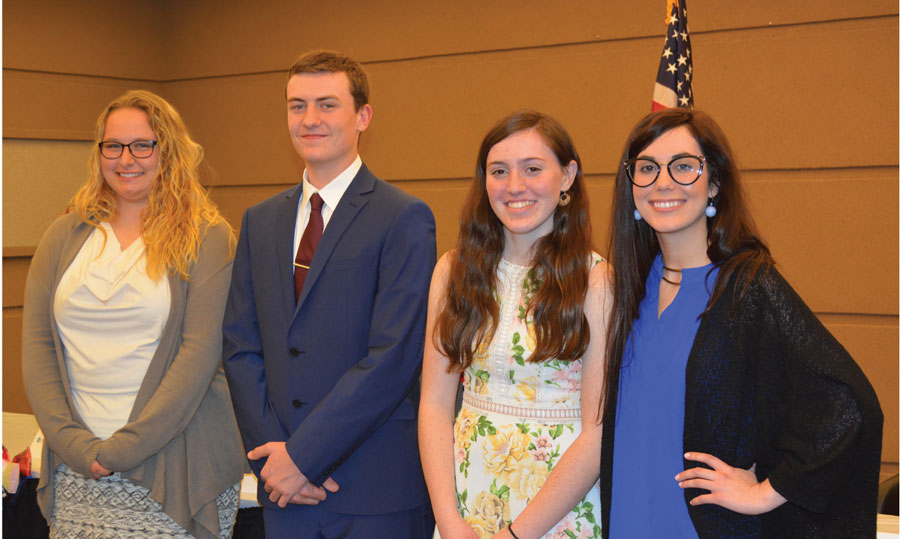
North Platte High School supports their students by making Youth Tour a class project. Students prepare for the competition and tend to be among the winners each year. Top North Platte Youth Tour students are L-R, Brittnie Deppen, Truman Byergo and Brianna Spiers with instructor Mandi Wahlenmaier. Brianna and Truman took top honors and the trip to Washington, D.C. Community volunteers serve as judges.
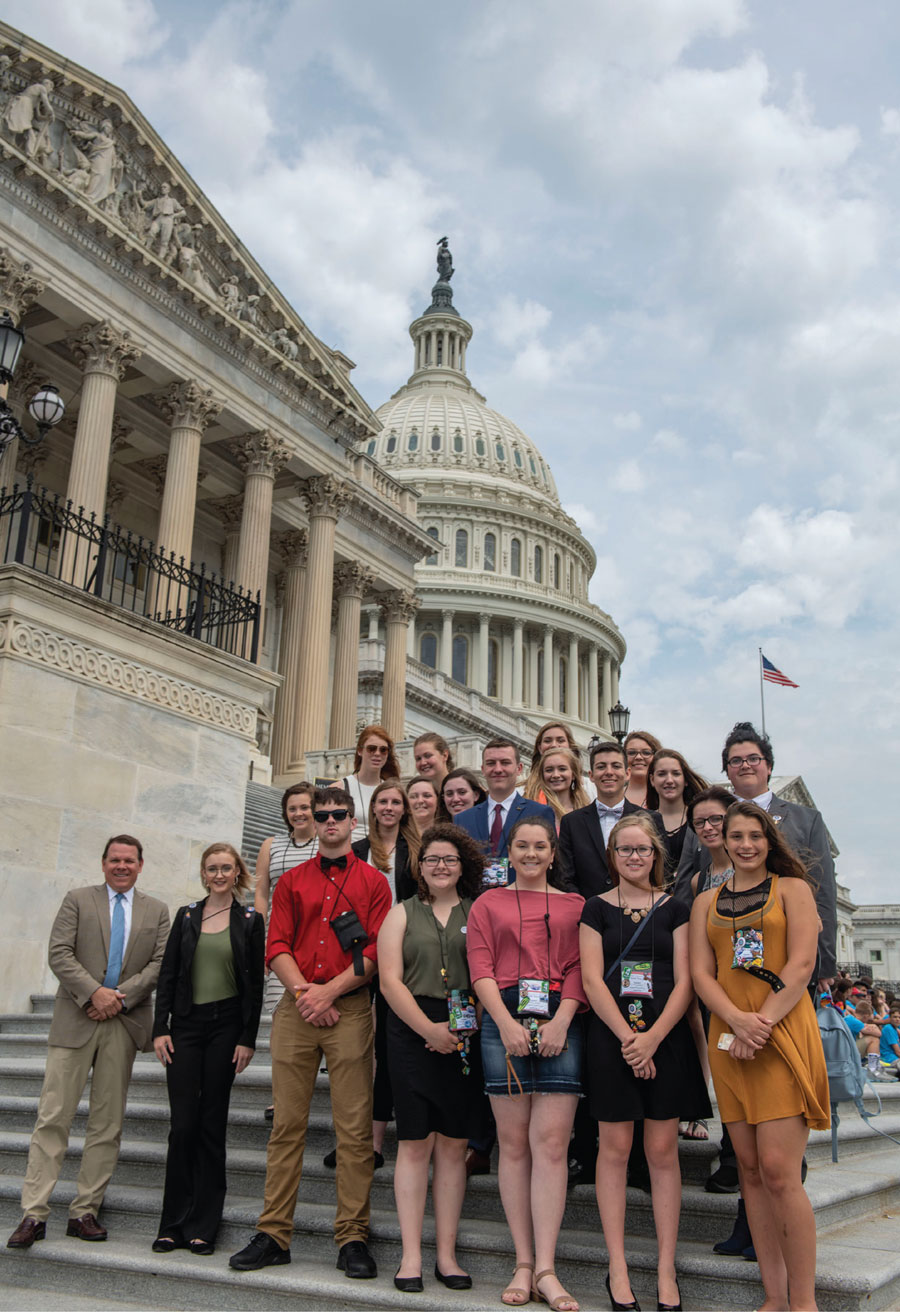
Who you gonna call? Rep. Sam Graves (far left, first row) for those who live in the 6th District of Missouri. Youth Tour students met with their Representative and took a photo.
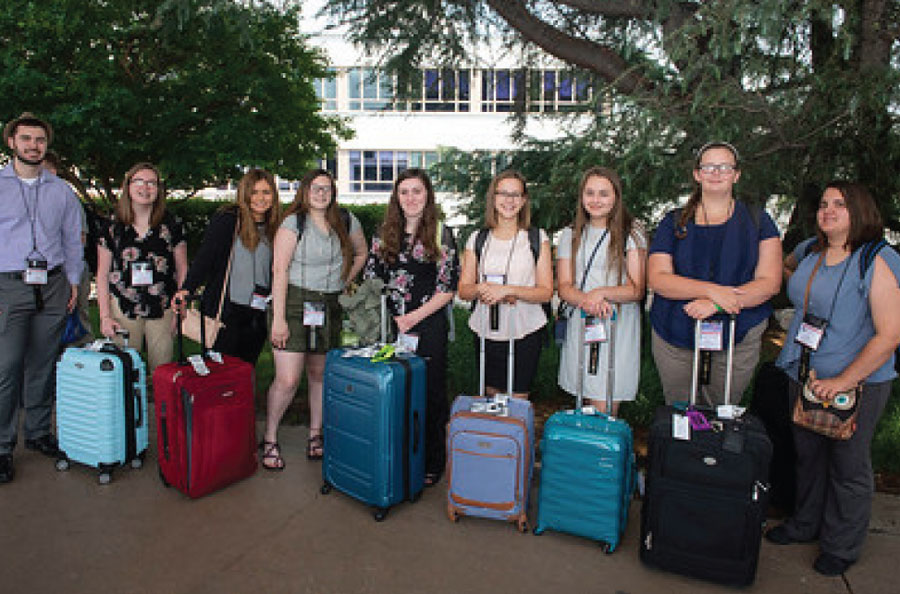
Platte-Clay has been sending students to Washington, D.C., for Youth Tour since 1964. The co-op will provide the theme and information to schools and in the Northland Connection in early fall for the 2019 contest and trip.
Scissors optional
Use the Co-op Connections app and find national discounts all over the U.S.-from food to pharmacies

The Co-op Connections program that you know and love is better than ever. Take a minute to download the free Co-op Connections app right to your smart phone.
Create an account and have access to thousands of discounts right at your finger tips. We are now going beyond the card with the new and improved program.
Also, visit connections.coop to see the revamped website which allows you to download and print coupons. Plus you can see and see how much you have saved through the program.
The Co-op Connections app provides discounts at more than 60,000 pharmacies nationwide and will help with prescription discounts.
Look for local and regional money-saving discounts online as both national and local savings are available.
Local businesses are welcome to be a part of the Co-op Connections program; simply call Platte-Clay at 628-3121 and we’ll get the ball rolling.
The Co-op Connections group will be sharing new offerings via coupons.com and Uber, for example.
For information, visit www.connections.coop and click on the Connections Card link.
Make your phone work for you by downloading the Co-op Connections app. Stop by the office if you need help. No need to carry another card–carry your phone with your savings.
New Aid to Construction regulations and pricing takes effect Oct. 1
Platte-Clay provides free and not so free services.
Free
Platte-Clay offers free consulting services when building or adding on to a structure within the service area.
Free wiring information, free information on heating and cooling units (HVAC), free HVAC sizing, free home construction information, free lighting information, free security recommendations.
Call 816-628-3121 to set an appointment to review everything from house plans to landscaping.
Can get expensive
When building, please contact Platte-Clay during the planning process. Unfortunately free can change to expensive for those who fail to take advantage of the services Platte-Clay provides.
For example, we would suggest routing lines to the home so they won’t be paved over to avoid digging up and replacing a concrete driveway. Or swimming pool. Or planted over with a row of beautiful trees, only to find they need to be dug up to repair or replace an underground line.
The member, builder or developer is responsible for any cost associated with replacing, repairing and or relocating any facilities as a result of construction activities, including grading. So in general, we recommend giving electric lines a wide berth when it comes to construction.
Got solar? Want solar?
For the early adopters in the area, Platte-Clay offers free consultation on how to properly interconnect an alternative energy facility, such as a solar array.
Platte-Clay crews built Solartech, the community solar array to provide an opportunity for members to have solar energy without solar panels, and as part of the process, became proficient with the ins-and-outs of interconnection.
New line, new location?
Not free is the cost of a line extension to a new home or building. Platte-Clay passes a portion of the construction costs to the member, which is increasing Oct. 1, 2018.
Check out rebates
Businesses may be able to get a rebate on business lighting.
All members may get a rebate for heat pump installation – $750 per ton for a new unit and $150 a ton for a replacement unit.
Yours, mine, ours
Platte-Clay must have access to the co-op electrical facilities to provide routine maintenance and if necessary, emergency services.
For more information on aid to construction and rebates, visit pcec.coop
The Northland Connection is published monthly by Platte-Clay Electric Cooperative, Inc., 1000 W. 92 Highway, Kearney, MO 64060. Postmaster: Please send address changes to: Northland Connection, PO Box 100, Kearney, MO 64060 or mail@pcec.coop.
Platte-Clay is an equal opportunity employer.