


November 2013 | Volume 75 | Issue 11
I Love a Rainy Night — or do we?
“Well, I love a rainy night.
I love a rainy night.
I love to hear the thunder,
Watch the lightning
When it lights up the sky –
You know it makes me feel good.”
Country music singer Eddie Rabbitt captured the top spot in the American country and contemporary music charts in 1981 with his hit single, “I Love a Rainy Night.”
For many of us, the sound of rain is comforting. It’s filling our ponds, giving our fields and plants a drink. And we, like the late country and western singer, Eddie Rabbitt, “love a rainy night.”
It’s just that when our rain storms get a bit carried away that it causes problems.
Lightning, looking for the best way to the ground, strikes the pole-mounted transformers, destroying the electronics.
The wind whips branches, sometimes breaking them, sometimes pulling and pushing them into the electric lines, causing a short or pulling wires down.
And straight-line winds and micro bursts can break and pull poles down.
And ice, well, ice on electric lines is a recipe for a power outage.
And then the lights go out. The clocks go dark.
The kids are scared, because, of course, the thunder and lightning continue.
And the comforting light that provides a sense of wellbeing and knowledge that anything bad is outside, in the dark, is gone.
And it’s hard to find the cell phone to call Platte-Clay and ask what caused the outage and how soon it will be fixed. Or to look at the app and check the Outage Map to see what the co-op knows. (Note: also check the co-op Facebook page for info and updates.)
Here’s how to plan for those times and perhaps even comfort the kids— of all ages.
 First, light. We recommend getting at least one outdoor landscaping solar light for each person in the family, each room and especially each stairway and probably several for the basement in anticipation of a tornado warning.
The lights range in price, but for probably less than $20, every family member can have their own solar light and can carry it with them. The lights can be easily charged during the day and simply distributed when there’s a storm coming.
 Crafty folks in your crowd? Take a small cardboard box, take off the flaps, cut a hole in the bottom, paint and decorate it and flip it over. There’s a nice solar light stand. If you’ve got some Santa’s helpers, they can make the solar “candle” stands as inexpensive and incredibly useful gifts.
Several in a painted flower pot could be pretty, as well as lights in a vase. It’s easy to go upscale and integrate the lights in a floral arrangement if that would be more appropriate for your home’s décor.
A little practice with the kids will help get them used to the idea of using the lights indoors to see their way. It’s amazing how much light one of the little solar lights casts when in total darkness.
And now for those of us who don’t want to be away from our tablets, phones and computers.
Many travelers routinely pack a solar charger to help keep their tablets and phones charged and ready to go, with or without an outlet.
One of the best ways to look at the power being off is that it’s a chance to do some indoor camping. Slightly inconvenient, but no worries about wildlife running through the campsite. An adventure. Stories to tell. Bragging rights.
And one of the best outfitters for camping, although usually outdoors, but great for indoor camping is REI, also a nonprofit co-op celebrating its 75th anniversary.
The co-op was formed in Seattle, Wash., by a group of 23 climbers whose purpose was to outfit climbers with quality camping gear. In 1996, REI expanded to the Internet, REI. com as the largest outdoor gear and apparel store, followed by REIoutlet.com in 1998. And now nearby on 135th Street in Overland Park.
So with such a pedigree, it only made sense to look to REI, a co-op and expert camping resource for information.
Solar phone and tablet chargers are common for travelers who often can’t get near an outlet in busy airports and campers far from any outlets.
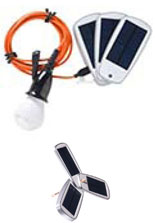
Solar chargers for LED lights left, and for cell phones, below. Available online and at outdoor stores.
REI carries solar chargers from a variety of manufacturers that range from about $70 for a Solio Bolt Solar Charger, to a folding Bushnell Solarbook 600 Solar Battery Charger for $250 that will keep multiple devices charged. The Solio charger was ranked best iPhone solar charger, although it will charge anything, don’t despair Droid users, which uses a USB cable.
Next, heat. For those with fireplaces or wood or pellet stoves, the only change will be cooking. For the rest of us, it will be cooking outside on our grill or over a campfire and trying to keep the heat inside.
People in northern climates cook out all the time, so it’s a matter of changing our mindset and putting on our hats, coats and gloves to go outside and flip the burgers and cook the eggs and bacon. Remember, we’re having an adventure and kids and significant others will pick up the mood. And if a big storm has roared through the Northland, it’s possible we could be cooking out for days so it’s better for everyone to have happy campers.
Staying warm means dressing for the weather. No flip flops and shorts, and wearing layers is a great idea. Probably not the time to worry if a down jacket makes us look chubby. In winter with no heat, being warm is the name of the game. Dressing for the outside while staying inside will go a long ways toward staying comfortable.
Those who go camping, especially tent camping, have an edge. There already may be a camp stove in your gear, although it will need to be used outside or in a well-ventilated area, and away from flammables.
To keep the house as warm as possible in the daytime, uncover the windows on the east and south side of the house to let the sun provide passive solar warmth. Scoot the cat over and share that spot in the sunlight. Keep the windows on the north and west side of the house covered.
Windows in general have a low R value, which means they transfer heat and cold easily. To increase the windows’ R-value, pull the drapes and close the blinds on the north and west side of the house to keep the heat from escaping. In the evening, also close the window coverings on the east and south side of the house to help retain heat.
Because heat goes to the cold, we start feeling chilly when sitting beside a window. We can increase our personal R-value by wearing more clothes and warmer clothes and by moving away from a window.
There are natural gas, kerosene and propane room heaters, but experts warn that there must always be at least one window cracked for fresh air and suggest using a CO2 detector. Using anything with a flame means that safety takes on increased importance and requires fresh air.
Some weekend would be a good time to practice being without power and for all family members to find that it would be possible to cope. More important, it could be a good training exercise in the event we do get slammed with an ice storm or a tornado.
And maybe, no matter what a rain storm brings, we’ll all be humming, “I Love a Rainy Night.”
Happy Thanksgiving
 From the CEO
Thanksgiving is a great time to reflect on how important our families, friends and our community are to us.
Recently we found out how co-op members think and feel about co-ops in general as part of a national survey, and how Platte-Clay members,
specifically, feel about the co-op. I’d like to thank all of the members who took time to help with the survey.
Members gave Platte-Clay high marks for one of the most important markers, system reliability, 9.18 on a 10 scale, excellent especially considering Missouri storms and the potential for widespread damage. In general, the responses were positive and the co-op ranked very high in the survey. I want to thank you for that.
Even though the members rated Platte-Clay with an overall 8.3 on a 10.0 scale, an excellent score, and higher than other area electric service providers, your co-op would like to get closer to a 10.
One of the most important ways your co-op works to meet members’ needs is by listening and paying attention to member feedback. And one of the really effective ways of understanding members is through the co-op Focus Group.
The Focus Group is about a dozen members who meet quarterly in the evening. Members are selected based on demographics, age and where they live within the Platte- Clay service territory. The meeting starts around 6 p.m., includes a meal and wraps up by 9 p.m. at the latest. Members discuss a variety of topics; for example, input on the web site navigation for the new site, pcec.coop
The co-op Focus Group provides qualitative research.
For Platte-Clay, members offer suggestions and provide feedback on several topics part based on their thoughts and feelings.
By having a group that spans decades of life experiences, and is a representative sample of the total membership, your co-op can learn the best way to explain and communicate with members, but more important, understand their concerns.
 The Focus Group is a great way to learn members’ points of view.
Your co-op now is looking for members to serve during 2014, and I encourage you to consider being a part of the group by filling out the online application.
As we think about the holidays, I’d like to add my personal best wishes to you and yours for a wonderful Thanksgiving Holiday.
If you have questions or concerns, please contact me.
How about giving Platte-Clay your 2 cents?
Your co-op, and since you’re a member, you’re an owner, is looking for 12 members to serve on the 2014 Focus Group.
Members will be asked to comment on a variety of projects, issues and topics to provide feedback on co-op operations and activities.
The Focus Group meets quarterly in the evening from about 6 p.m. to 8:30 p.m. The meeting includes a meal and a stipend to offset traveling costs.
To be considered, please visit pcec.coop and click on the Newsroom link, and in that drop-down box, click on Focus Group. That will bring up an interactive form that will come directly to Platte-Clay.
For those without Internet service who would like to be considered for the Focus Group, please call 628-3121 and let the Customer Service Rep know and we’ll send or fax a form to you.
Topics include, for example, marketing plans, possible new services, activities related to operations and member awareness on activities.
The Focus Group is part of the co-op outreach that helps Platte- Clay “meet and exceed members’ expectations.” If you’re interested in participating, please fill out the online form or get a copy of the form and return it to Focus Group, Platte-Clay Electric Co-op, PO Box 100, Kearney, MO 64060
Thanks in advance for your interest.
Use Oxygen?
[column_break]
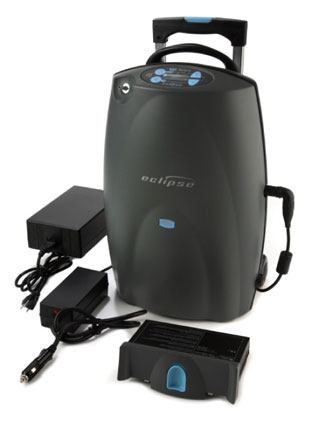
Oxygen concentrator, below, uses power; a portable tank can be a temporary backup system during an outage.
Recently the power was off because of a storm, and the wind, rain and lightning continued for several hours. Bands of storm cells were expected to continue passing over the area through the night. Crews were out and were waiting for a safe time, when the lightning subsided between storms, to go to work restoring service.
A panicked member called in, and said, “My husband is on oxygen 24 hours and we don’t have lights!” When will the power be back on?”
Members who don’t have a backup power supply or a well thought out plan on where to go–perhaps to a friend or family member’s home or a hotel are gambling that they always will have power. And that’s simply not going to be the case in spite of your co-op’s best efforts and crews who work 24 x 7 x 365.
Platte-Clay is an incredibly reliable power provider and works to make certain the system will always be available to serve co-op members.
But your co-op has to deal with any number and kind of variables: drivers running into poles and pulling lines down, lightning, fires, floods, snakes and mice finding their way into transformers, even copper thieves. So the odds are, for the gamblers among us, that the power will be off a few minutes, a few hours, or even a few days.
For those who need oxygen, doctors prescribe oxygen in tanks or oxygen concentrators.
Oxygen in tanks can be compressed oxygen gas or liquid oxygen.
Oxygen concentrators take in regular air, remove the other gases and produce oxygen that’s about 95 percent pure—up from the 20 percent or so that we breathe.
Smaller tanks are more portable, and are easier to use when traveling, especially with refills available.
A concentrator runs on electricity, so doctors recommend having a backup oxygen tank if the power goes out. Another important option is to have a backup battery or two. Please make sure it’s charged and ready to go.
Another solution for those who need constant power is a small generator that will provide 500 to 1000 Watts of power, depending on your unit. Oxygen suppliers should be able to provide guidance on the appropriate size. Platte-Clay sells permanently-mounted generators and can help size one for those who want total home back up so everything is powered.
Because oxygen is a fire hazard, the tanks and machines must be kept at least 6’ away from flames or heat sources, not used around flammable products and patients should have a fire extinguisher close by—within reach, according to the literature.
While for the most part electric service is back on within hours, there are no guarantees and we all want to safely breathe several times a minute.
So the question, “how long will it take to get the power back on” isn’t really the question to ask.
It’s “where is my backup battery or backup oxygen tank and the refills?”
Generators for standby backup power
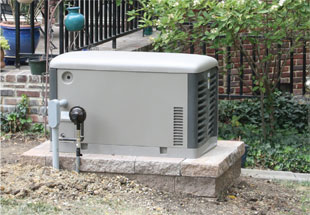 Although many of us wouldn’t mind a couple of days of indoor camping, playing board games with the kids and reading by the windows in the sunshine, others among us fly into a panic.
For the families who do not want an adventure, there are standby generators.
Platte-Clay carries the Kohler whole-house and commercial-sized units. The units are reliable, test themselves monthly and run on propane or natural gas.
A standby generator comes on automatically, much like a central air conditioner, and provides power within seconds of a power outage.
These reliable units are hardwired and provide “clean” power, that is they won’t harm the electronics in everything from a high efficiency washing machine to a laptop.
To determine the proper sized unit, make a list of the appliances to be powered, from the basics to simply everything.
If it’s important to have power 24 x 7, then call Platte-Clay for one stop shopping — assistance with sizing, costs, permits and installation, plus reliable follow up and service.
Family Emergency Supply List
There is no one right way when it comes to preparing for an emergency, including a several-day long power outage. Each family is different and has different resources available.
This list is for co-op members who may want to or find it necessary to stay in their home during an outage of a few days. It’s just not practical to take our horses to a hotel and other families may be snowed in.
Here are some suggestions on how to take the edge off of indoor camping and to make the most of time without electric service.
Water, food, and clean air are critical for survival, and the need is driven home during an emergency.
Each kit also should be designed to include and protect important documents.
These are suggestions from FEMA; the Scouts may have a additional recommendations, and those with animals, pets or livestock will need to develop a checklist and storm kit for them.
Recommended Supplies for a Basic Kit
Water one gallon of water per person per day, for drinking and sanitation. Blizzard warnings? It’s much easier to fill water jugs and to get prepared while there are lights and the pumps are working.
Food at least a three-day supply of non-perishable food. Try some of the non-perishable foods so kids can help pick their favorites. It will go a long way in preventing unhappy kids.
- Battery-powered radio and a NOAA Weather Radio with tone alert, and extra batteries for both Flashlight and extra batteries
- Back up batteries for everything that uses batteries
- Solar chargers for everything that needs charging
- First aid kit
- Whistle to signal for help
- Personal hygiene items including feminine supplies
- Infant formula and diapers
- Moist towelettes, garbage bags and plastic ties for personal sanitation Plastic sheeting and duct tape to shelter-in-place
- Wrench or pliers to turn off utilities
- Can opener for food (if kit contains canned food)
Clothing and Bedding
In Missouri, we’ll need to consider how we’ll stay warm. For some families, it’s possible the power will be out and we won’t have heat. Think about clothing and bedding supplies to account for growing children and other family changes. Plan ahead on how the family will cope with indoor camping.
Plan for at least one complete change of warm clothing and shoes per person, including:
- Jacket or coat
- Hat and gloves
- Long pants
- A long sleeve shirt
- Sturdy shoes
- Several pairs of warm socks
- Sleeping bag or at least one warm blanket for each person
Optional supplies
Some of these items, especially those marked with a * can be dangerous, so adults or older children will need to handle them.
Emergency reference materials such as a first aid book or a print out of the information on www.ready.gov – Rain gear – Mess kits, paper cups, plates and plastic utensils – Cash or traveler’s checks, change – Paper towels – Fire extinguisher – Tent – Compass – Matches in a waterproof container* – Signal flare* – Paper, pencil – – Disinfectant* – Household chlorine bleach* – We can use bleach as a disinfectant (diluted nine parts water to one part bleach), or in an emergency we can also use it to treat water. Use 16 drops of regular household liquid bleach per gallon of water. Do not use scented, color safe or bleaches with added cleaners. – Medicine dropper – Important family documents such as copies of insurance policies, identification, prescriptions, medical alerts and bank account records in a waterproof, portable container. Bank cards in a handy place.
If the power goes off, co-op families can be prepared and co-op crews will be working to restore service as soon as possible. But that may be a couple of days.
Co-op and Industry Update
This is a great time to update all names and telephone numbers for the Platte-Clay account. Just call 628-3121 anytime, 24 x 7 x 365 and we can add or change your telephone number.
Having the current telephone number is important because Platte- Clay calls to alert members about scheduled outages in the affected area to make it easier for members to make plans for daily activities.
Plus, when calling in, the telephone system recognizes the telephone number(s) associated with the account. That saves time, and allows members to report outages or problems automatically without waiting in a queue.
The member who owns the account may add the names of other parties to the account — important because the co-op can not give out information to anyone whose name is not on it.
Classified Ads
To submit an ad, complete the ad form, use the website, www.pcec. coop, or send in a brief nine-word description of the item you wish to advertise no later than the 15th of the month, to Platte-Clay Electric Co-op, PO Box 100, Kearney, MO 64060, Attn. Northland Connection.
Ads run on a first come, first served basis.
Ads should be about 10 words or less and include a phone number. Please indicate the category, i.e., for sale, giveaway, wanted, and the topic, such as car or boat.
Please type or print your ad. If your ad does not appear, you may resubmit it for the next available edition. Ads are for Platte-Clay members only. No business or commercial ads. If your ad is time sensitive, we suggest using one of the local ad-supported publications.
Members may pick up an ad form at the PCEC office in Kearney or Platte City or use the website, pcec.coop Click on Classified Ad or send directly to mail@pcec.coop
The area code is 816 unless otherwise noted.
For Sale
Tractor: ‘90 Case IH 53 hp diesel, ROPs and steel canopy. 2112 hrs. 628-5808.
Tires: Used, exc. cond, truck or trailer, 10 ply. LT 235/85 R16, LT 265/75 R16. 5, $40 ea. 580-3555.
Tool boxes: for 8’ bed pick up, 1 for back, 2 sides. $350 obo. 529-7538.
Feeder: Round bale for horses, 721- 3966.
Building materials: Concrete blocks, bricks, lumber. 223-1507.
Figurines: Santa Claus from around the world. 470-7663.
Truck: ‘03 F-150, V8, 8ft. bed/liner, gr. cond. $4300. 407-1051.
Walk-in cooler: 8 x 10 Bush, expandable. $3300. 407-1051.
Car: 08 Grand Marquis white/Palm Beach/Cashmere leather. Remote start, 74k. $12,900. 215-6210.
Dogs: AKC standard Poodles & Labradoodle pups M/F, $500 and up. 984-6821.
Table saw: Craftsman 10” blade with extensions. $125 obo. 628-6921.
Firewood: Pickup or delivery. 716-9158.
Dryer: Kenmore, white, used only one yr. $200. 320-2993.
Gas furnace: Carrier 88k, very good cond. $250. 628-1942.
File cabinet: Metal, 4 drawer legal size. $50. 532-0272.
Curio cabinet: Cherry finish, 52” wide, exc. $1399 new, $250. 357-2160.
Wanted
Dead elm trees to cut. 721-3966.
Services
I teach Chinese to children and adults in local library, $30-$45 an hour. 686-9638.
Piano tuning & repair. 721-3966.
Carpet cleaning: 3 rooms, $90. 628-4801.
Free
Dog – Black lab, male. Needs home. He’s friendly, loving. 628-6792.
Peritoneal dialysis tubing, caps, etc. 320-2209.
The Northland Connection is published monthly by Platte-Clay Electric Cooperative, Inc., 1000 W. 92 Highway, Kearney, MO 64060. Postmaster: Please send address changes to: Northland Connection, PO Box 100, Kearney, MO 64060 or mail@pcec.coop.
Platte-Clay is an equal opportunity employer.